Design for Manufacturability: 10 Tips for Aluminum Die Casting
Practical DFM guidelines for aluminum die casting — wall thickness, draft angles, ribs, bosses, and other design features that affect cost and quality.
Practical DFM guidelines for aluminum die casting — wall thickness, draft angles, ribs, bosses, and other design features that affect cost and quality.
Aluminum extrusion is a process where heated aluminum billets are pushed through a shaped die to create continuous profiles with consistent cross-sections. This method is ideal for producing long parts such as frames, rails, and structural components.
One of the key strengths of extrusion lies in its design flexibility. Complex cross-sectional shapes can be achieved without excessive tooling costs, making it suitable for customized designs. Additionally, extruded aluminum typically offers excellent strength-to-weight ratio, corrosion resistance, and surface finish options such as anodizing or powder coating.
However, extrusion is limited to uniform cross-sections, meaning it may not be suitable for parts requiring intricate 3D geometries or varying thicknesses.
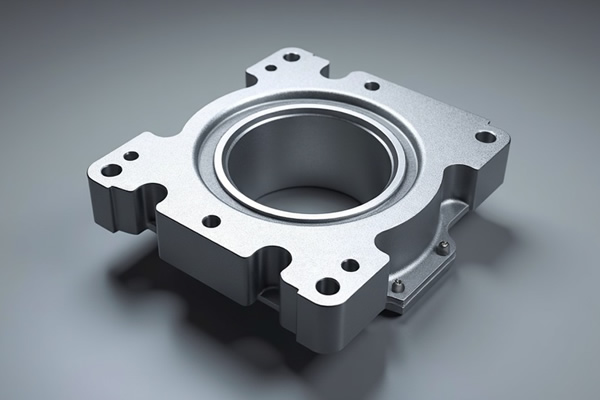
Die casting involves injecting molten aluminum into a steel mold under high pressure to form precise, complex shapes. This process is highly efficient for producing components with detailed features, thin walls, and tight tolerances.
Die casting is particularly advantageous for high-volume production. Once the mold is created, it allows for rapid and consistent manufacturing with minimal variation between parts. It also supports integrated designs, reducing the need for secondary machining or assembly.
On the downside, die casting typically requires higher upfront tooling costs, and design changes can be more expensive once the mold is finalized. It is also less suitable for very large parts compared to extrusion.
When choosing between these two processes, the complexity of your product design plays a crucial role. Aluminum extrusion is best suited for linear designs with consistent profiles, such as beams, channels, or enclosures.
In contrast, die casting excels in producing intricate, three-dimensional shapes with internal cavities, ribs, and fine details. If your component requires multiple integrated features or non-uniform geometry, die casting is often the better choice.
Production scale significantly influences the decision. Extrusion generally involves lower tooling costs, making it more economical for small to medium production runs or projects that require design flexibility.
Die casting, while requiring a higher initial investment in molds, becomes highly cost-effective in large-scale production due to its speed and repeatability. The per-unit cost decreases significantly as production volume increases, making it ideal for mass manufacturing.
Both processes utilize aluminum alloys, but the resulting material properties can differ. Extruded aluminum often has superior mechanical strength due to the directional grain structure formed during the extrusion process. This makes it suitable for load-bearing or structural applications.
Die-cast aluminum, on the other hand, may contain small amounts of porosity, which can affect strength and weldability. However, it performs well in applications where dimensional accuracy and surface detail are more critical than maximum strength.
Extrusion typically provides a smoother surface finish and is highly compatible with various finishing techniques. It is easier to anodize extruded parts, achieving both functional and decorative coatings.
Die casting can also produce good surface finishes directly from the mold, but additional finishing processes such as machining, polishing, or coating may be required depending on the application. For highly aesthetic or precision surfaces, this should be factored into the overall cost.
If your project requires quick turnaround or frequent design adjustments, extrusion offers greater flexibility. Tooling is simpler and faster to modify, allowing for shorter lead times.
Die casting, while efficient in mass production, involves longer setup times due to mold design and manufacturing. Any design changes after tooling can lead to delays and additional costs.
Ultimately, the decision between aluminum extrusion and die casting depends on your specific project requirements. If your design is linear, requires high strength, and involves moderate production volume, extrusion is likely the better option.
If your product demands complex geometry, tight tolerances, and large-scale production, die casting provides a more efficient and cost-effective solution over time.
Carefully evaluating factors such as design complexity, production volume, budget, and performance requirements will help you select the most appropriate process, ensuring both quality and efficiency in your final product.
Upload your drawings or describe your requirements. Our engineers will respond within 24 hours with a detailed quote and DFM feedback.
We use cookies to collect information about how you use this site. We use this information to make the website work as well as possible and improve our services.more details